Growing guide
PPFD, DLI and PPE: the three numbers that size a grow room
Watts tell you what a light costs to run, not what your plants receive. Here is how to read a grow light spec sheet and work out how much light a room really needs.
Most people start comparing grow lights by wattage. Wattage only tells you how much electricity a fixture draws. Plants respond to photons, so the useful numbers on a spec sheet are the ones measured in micromoles (µmol) of light.
PPF: how much light the fixture produces
PPF (photosynthetic photon flux) is the total amount of usable light a fixture emits every second, in µmol/s. It says nothing about where the light lands. A 1200 W top light such as our S3400⁺ is rated at more than 3,466 µmol/s.
PPE: how efficiently it turns power into light
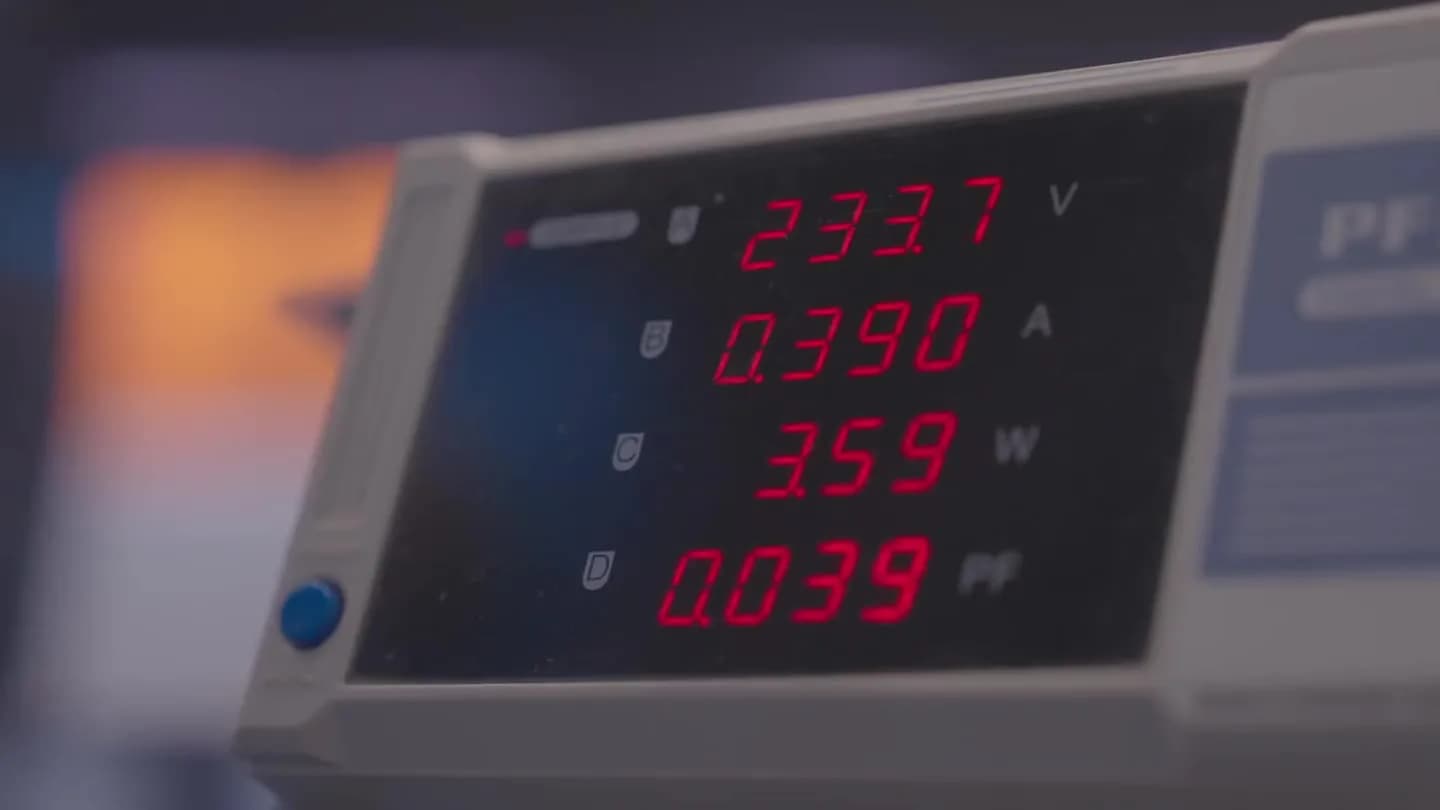
PPE (photosynthetic photon efficacy) is PPF divided by input power, in µmol/J. It is the number that decides your electricity bill. At the same light output, a fixture at 2.85 µmol/J draws about 12% less power than one at 2.5 µmol/J, every hour it is on.
PPFD: how much light reaches the canopy
PPFD (photosynthetic photon flux density) is the light arriving on one square metre of canopy per second, in µmol/m²/s. It depends on the fixture, the hanging height, the room size and the walls. This is what you measure with a quantum sensor, and it is the number to compare against your crop's needs.
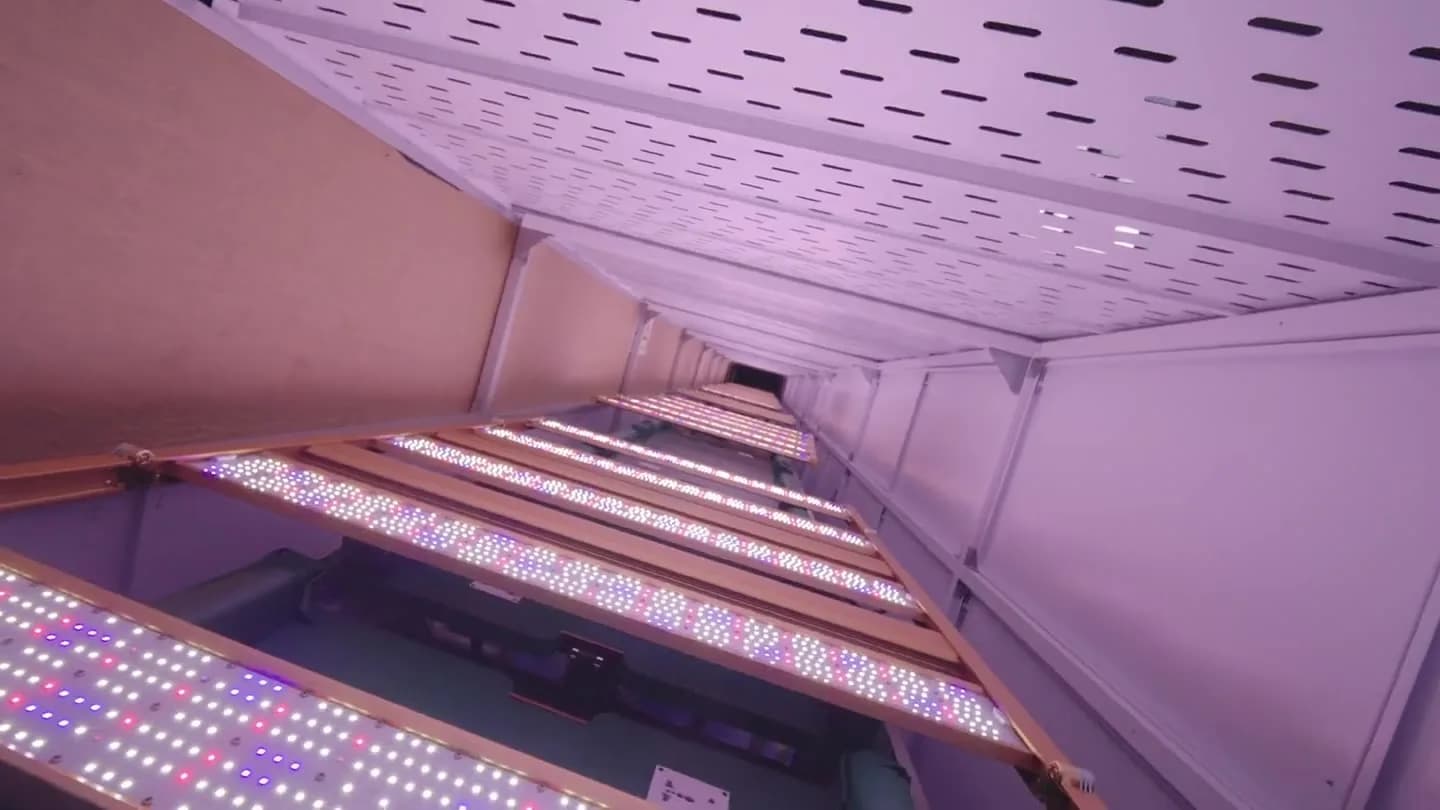
Two things matter: the average PPFD over the canopy and its uniformity. A high centre reading with weak corners gives you uneven plants. Good spec sheets state the average over a defined area and height — for example, 1,030 µmol/m²/s over a 4 × 6 ft area at a 20-inch hang for the S3400⁺.
DLI: the daily dose
DLI (daily light integral) is the total light the canopy receives in one day, in mol/m²/day. It links intensity and photoperiod:
Because of this, you can reach the same DLI with a lower intensity over longer days, or a higher intensity over shorter days. Short-day flowering crops are locked to about 12 hours, so for them intensity is the only lever.
Typical targets by stage
| Stage | PPFD (µmol/m²/s) | Typical DLI (mol/m²/day) |
|---|---|---|
| Seedlings and clones | 100–300 | 6–15 |
| Leafy greens and herbs | 200–400 | 12–20 |
| Vegetative growth | 300–600 | 20–40 |
| Flowering, ambient CO₂ | 600–1,000 | 25–45 |
| Flowering, enriched CO₂ | 900–1,400 | 40–60 |
These are common starting ranges from horticulture research and grower practice, not fixed rules. Cultivar, temperature, CO₂ and irrigation all change what a plant can use. Raise intensity step by step and watch the plants.
Putting it together
- Decide the target PPFD and DLI for each room and stage.
- Pick fixtures whose published average PPFD covers your canopy size at a hanging height you can actually use.
- Compare PPE between candidates — it is your running cost for the next five years or more.
- Measure the canopy after installation and adjust height or dimming. Plan for a sensor in each room so you keep measuring, not just once.
Our G_Control controller can read a PPFD sensor (sold separately) alongside temperature, humidity and CO₂, and dim every fixture on the RS485 line from one screen. If you are planning a room and want a lighting layout, send us the dimensions.
Planning a room?
Send us the room size and the crop. Our engineers will suggest a lighting and control layout that fits.
Talk to an engineer